logo Council of Europe
The Council of Europe's Anti-corruption body
GRECO Newsletter - December 2025
INFOLETTRE EN FRANCAIS
Season’s Greetings from GRECO

As 2025 comes to an end, we reflect on a year shaped by strong cooperation and important progress within GRECO, made possible by the engagement of its members, evaluators, and observers.

Entering 2026, we do so with confidence, inspired by our shared commitment to advancing integrity, transparency, and good governance across our membership.

We wish you peaceful holidays and a New Year that brings renewed momentum, fresh perspectives, and continued collaboration.

GRECO Secretariat
“Democracy is at risk without a culture of integrity and strong anti-corruption action”: Statement by GRECO President on the occasion of the Anti-Corruption Day

To mark the International Anti-Corruption Day, held annually on 9 December, the President of the Group of States against Corruption of the Council of Europe (GRECO), David Meyer, has issued the following statement:

“Corruption destroys citizens’ trust in democratic institutions and undermines the rule of law; this is especially true when a perception of impunity spreads in society and ethical conduct is inadequately embedded or insufficiently reinforced.

“Integrity in public life is not an accessory to democracy; it is its foundation. Determined and robust action to prevent and combat corruption, in all its forms and without exception, is essential to ensuring the resilience of democratic institutions and the trust that citizens place in them.

“Democracy requires a culture of integrity and accountability. The influence of individual political leaders in promoting this must not be underestimated. But for it to be the norm rather than the exception, ethical leadership by example must be coupled with effective integrity and anti-corruption systems, transparency, and independent oversight. This combination remains the cornerstone of democratic credibility and institutional legitimacy.

“Anchored in the New Democratic Pact for Europe, GRECO will continue to assist its member states in strengthening their legal and institutional frameworks to prevent and combat corruption, promoting ethical leadership, and reinforcing accountable institutions that uphold citizens’ trust and contribute to democratic security.

Read the full statement ›
Strengthening Good Governance: Consolidating Integrity and Accountability at the Sub-National Level

The Council of Europe's Group of States against Corruption (GRECO) held a dedicated side event on 20 November 2025 in Strasbourg, organised in cooperation with the Congress of Local and Regional Authorities of the Council of Europe, to advance dialogue on integrity and accountability at the sub-national level.

The event brought together GRECO national delegates, Congress representatives, local and regional officials, international experts, civil society and youth delegates.

Discussions centred on operationalising integrity frameworks for municipalities and regions as GRECO moves into its 6th Evaluation Round. Building on insights from previous evaluation rounds and relevant international standards, participants examined topics including transparent decision-making, management of conflicts of interest, public procurement safeguards, asset and interest declarations, interactions with third parties and lobbying, whistleblower protection and access to information. They also considered how risk-based integrity strategies, ethics and training arrangements, as well as effective complaint-handling and oversight mechanisms can be tailored to local realities.

The event underscored the need for coordinated action across all levels of government and reinforced the value of sustained cooperation between GRECO, member States, the Congress and local stakeholders in strengthening corruption prevention closest to citizens.

More information available here

Watch the short video produced for the event here ›
Whistleblower Protection Matters: GRECO’s New Thematic Paper on Whistleblowing in Law Enforcement

Whistleblowers play a crucial role in exposing corruption across the public and private sectors. 

This new publication outlines GRECO’s findings and approach to whistleblower protection within the context of its Fifth Evaluation Round, focused on preventing corruption and promoting integrity in central governments (persons with top executive functions) and law enforcement agencies. It covers three main areas: the legal framework for whistleblower protection; training, information and advice for potential whistleblowers; and systems for monitoring how well protections are working in practice. It also spotlights examples of good or promising practices from member states that could guide future reforms.

Read the thematic paper ›
GRECO highlights the need for effective systems for accessing official documents to fight corruption
On the occasion of the International Day for universal access to information on 28 September, GRECO released a new thematic paper on the right to access to information. In it, GRECO reiterates that an effective system for accessing official documents and information is essential for combatting corruption, enhancing the accountability of governments and public officials, and enabling citizens to participate in public life in an informed manner. 

The publication provides a comparative cross-country review of its findings in three main areas: the regulatory regime, institutional framework and compliance with national laws. It did so on the basis of GRECO’s Fifth-Round evaluation reports, which focused on preventing corruption and promoting integrity in central governments and law-enforcement agencies.

The paper also stresses the key role of journalists in exposing corruption and holding public authorities to account, while warning that the legal and political pressures they may face can restrict both their work and the public’s right to information.

Examples of good and promising practices across member states include appointing trained information officers, issuing clear guidelines, developing internal systems for handling requests, establishing independent oversight bodies, assisting individuals exercising their right to access information, and sanctions for non-compliance. 

At the same time, GRECO has identified various shortcomings and obstacles: delays in handling requests, insufficient proactive disclosure, overly broad legal restrictions, weak or absent oversight, limited data, and low public awareness of access rights. To address these issues, in its reports, it has recommended adopting access-to-information legislation, ensuring that proactive transparency is legally enshrined and effectively implemented, setting up or strengthening independent oversight mechanisms, and limiting restrictions and exemptions to what is strictly necessary.

Read the thematic paper ›
GRECO President highlights transparency as a cornerstone of democracy and the rule of law

David Meyer, President of GRECO, underlined the crucial role of transparency in strengthening the rule of law and democracy during a meeting on Transparency and Privacy in Democratic Societies. The event was jointly organised by the Access Info Group responsible for the Council of Europe’s Tromsø Convention, and the Committee of the Council of Europe’s Convention 108.

In his remarks, Mr Meyer emphasised that transparency is central to GRECO’s monitoring work. “It is not only a safeguard against corruption, but also a pillar of public trust in public institutions and those who serve them,” he said.

He highlighted that access to information plays a key role in achieving transparency but must be balanced with respect for the right to personal data protection. The challenge is to maintain a fair and proportionate balance between transparency in the public interest and the protection of individual privacy.

GRECO contributed to the event through the participation of its experts, who presented GRECO’s findings and practical experience in promoting transparency in lobbying contacts and in the declaration of assets and interests by public officials.

Poland: High-level GRECO delegation urges continued efforts to prevent corruption and promote integrity

In meetings in Warsaw on 28 November 2025, a high-level delegation from GRECO called on Poland to fully implement the GRECO recommendations that remain outstanding. Such action is essential to restoring judicial independence and strengthening integrity among top executive functions of the central government, parliamentarians, judges, prosecutors and law enforcement agencies.

The visit followed the decisions adopted by GRECO in November 2023 and December 2024 noting that Poland had not yet demonstrated sufficient progress in implementing its recommendations and placing the country under its non-compliance procedure for both the 4th and 5th Evaluation Rounds, including the 4th Round ad hoc “Rule 34 procedure”. It was an opportunity to discuss with the authorities the legislative and policy steps needed to address long-standing concerns outlined in GRECO’s reports.

 GRECO will next assess the measures taken by the Polish authorities under the 4th and 5th Evaluation Rounds in 2026 and 2027, respectively.

Read the full press release ›
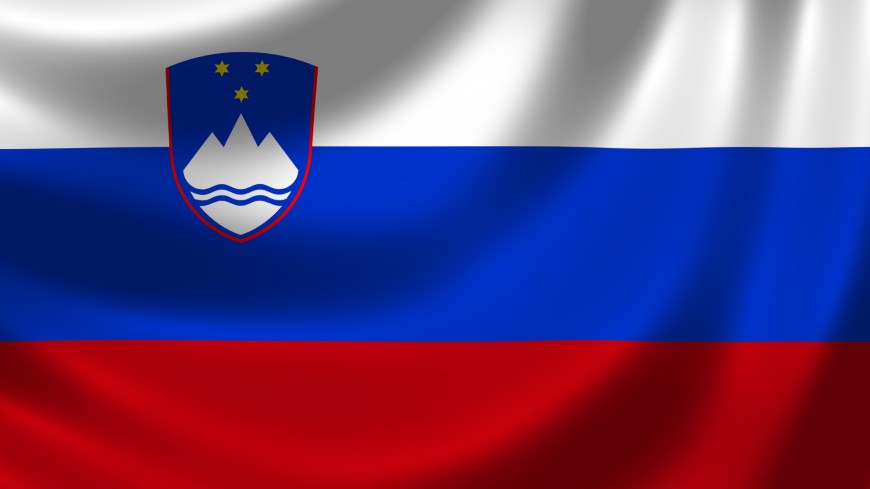
Evaluation visit to Slovenia under GRECO’s 6th Round

A delegation of four GRECO evaluators from Croatia, Portugal, Sweden and the

United Kingdom, together with two members of the Secretariat, visited Slovenia from 24 to 28 November 2025 to conduct the on-site evaluation under GRECO’s 6th Round, which focuses on preventing corruption and promoting integrity at the sub-national level. The delegation gathered information on how Slovenia addresses corruption in its municipalities through meetings with various interlocutors and stakeholders. The Municipality of Ljubljana and the Municipality of Hrastnik volunteered to participate in the evaluation.

During the visit, the delegation met representatives of central institutions, oversight bodies, municipal councils, one of the mayors, deputy mayors and municipal administrations. It also held discussions with associations of municipalities, civil society organisations, media representatives and academics.

GRECO will examine the evaluation report assessing the situation in the country and in the two participating municipalities at its plenary in June 2026.
6th Round Evaluation Visit Undertaken in Luxembourg by GRECO Delegation

From 22 to 26 September 2025, a delegation comprising four GRECO evaluators (Austria, Belgium, France and Monaco) and three members of the Secretariat visited Luxembourg to carry out the on-site evaluation under its 6th Round, aimed at preventing corruption and promoting integrity at the sub-national level. 

The delegation focused on how Luxembourg is tackling corruption in its municipalities. Luxembourg city, the capital, and the municipality of Dudelange volunteered to participate in this evaluation.

During the visit, the delegation met with numerous authorities and stakeholders from central and oversight bodies, municipal councils and public administration, as well as from civil society, media, and the legal professions.

An evaluation report assessing the situation in the country and the two selected sub-national authorities will be drawn up and examined by the GRECO plenary in June 2026.
Latest published reports (15 July – 17 December 2025)

5th Round: Preventing corruption and promoting integrity in central governments (top executive functions) and law enforcement agencies

Cyprus – Compliance Report

Denmark – Addendum to the 2nd Compliance Report

France – Addendum to the 2nd Compliance Report

Germany – 2nd Compliance Report

Malta – Addendum to the 2nd Compliance Report

Iceland – 2nd Addendum to the 2nd Compliance Report

Poland – Addendum to the 2nd Compliance Report

Portugal – Compliance Report

Romania – Compliance Report

Slovak Republic – Addendum to the 2nd Compliance Report

Spain – Addendum to the 2nd Compliance Report

United Kingdom – Addendum to the 2nd Compliance Report

4th Round: Prevention of corruption in respect of members of parliament, judges and prosecutors

Ireland – 2nd Addendum to the 2nd Compliance Report

Liechtenstein – 2nd Compliance Report

Portugal – 4th Interim Compliance Report

Ad hoc Procedures (Rule 34)

Slovak Republic – Ad Hoc Report

Plenary Meetings

GRECO 101, 18-21 November 2025

Next GRECO Plenary and Evaluation visits (January - June 2026)

GRECO will hold its 102nd and 103rd Plenary Meetings in Strasbourg from

23 to 27 March 2026 and from 8 to 12 June 2026, respectively.

At the 102nd Plenary Meeting, two Sixth-Round evaluation reports on Estonia and the Slovak Republic will be examined and adopted. Three additional evaluation reports on Luxembourg, Slovenia and the United Kingdom will be examined and adopted at the 103rd Plenary Meeting. In addition, various compliance reports under previous evaluation rounds concerning Armenia, Austria, Bosnia and Herzegovina, Czechia, Denmark, Greece, Georgia, Hungary, Ireland, Italy, Kazakhstan, Lithuania, Republic of Moldova, Montenegro, Poland, Serbia, Türkiye, Ukraine and United States of America will be examined and adopted at those meetings.

Four evaluation visits under the 6th Evaluation Round are planned for the first half of the year:

- United Kingdom (12-16 January 2026)

- Poland (2-6 March 2026)

- Latvia (13-17 April 2026)

- Netherlands (18-22 May 2026)

Noteworthy case-law from the European Court of Human Rights

Please find below, in chronological order, selected rulings delivered by the European Court of Human Rights that may be of particular interest to the GRECO community.

Selimi v. Albania (no. 37896/19, 25 November 2025) concerns the dismissal of a Supreme Court judge based on findings of vetting proceedings that assessed his contact with persons involved in organised crime. The applicant complained that he had not had a fair hearing in the vetting proceedings, in breach of Article 6 § 1 of the Convention (fair hearing). Breach of Article 6 § 1.

Ilievska and Zdraveva v. North Macedonia  (nos. 19689/21 and 42794/22, 13 November 2025) and Ribarev v. North Macedonia (no. 39987/22, 13 November 2025) concern the applicants’ inability under domestic law to appeal against the State Judicial Council’s (“SJC”) decisions dismissing them from their judicial post following the remittal of their cases by second-instance Appeal Panels. They complained under Article 6 § 1 of the Convention about a breach of their right of access to court. Breach of Article 6 § 1.

Tsatani v. Greece (no. 42514/16, 14 October 2025) concerns disciplinary proceedings against a prosecutor, leading to a sanction, brought by the Court of Cassation (CC) President, after she conducted the preliminary disciplinary investigation and examined the applicant’s recusal request against her. The applicant complained that she had not been heard by an impartial tribunal, in violation of Article 6 § 1 of the Convention, as the President of the Court of Cassation (hereinafter also “the CC”), who had been conducting the preliminary disciplinary investigation, had herself examined the recusal request submitted by the applicant against her and had subsequently brought disciplinary proceedings against the applicant. Breach of Article 6 § 1.

 Janković v. Slovenia (dec.) (no. 15118/22, 9 October 2025) concerns conclusions reached by the Commission for the Prevention of Corruption in a supervision-of-assets procedure involving the applicant, a well-known politician in Slovenia who has been elected as mayor of Ljubljana since 2012. The applicant complained under Article 6 § 1 of the Convention that he had been denied access to a court because the judicial review of those conclusions in his case had been limited in scope. Inadmissible.

Yakymchuk v. Ukraine (no. 26519/16, 11 September 2025) concerns covert audio and video recording of two incidents of a former judge in her office used as evidence in criminal proceedings to convict her of bribery. The applicant complained, amongst others, that the covert recording of her conversations held in her office was unlawful and disproportionate and interfered with her right to respect for private life protected by Article 8. Breach of Article 8.

Have your say

You are receiving this newsletter based on your interest in the fight against corruption. We would love to hear your feedback, you can contact us at [email protected].

Get the latest updates

Sign up for our newsletter
                                                              Do not hesitate to transfer to any interested person.
Council of Europe, Avenue de l'Europe F-67075 Strasbourg Cedex
Tel. +33 (0)3 88 41 20 00
www.coe.int
logo Council of Europe